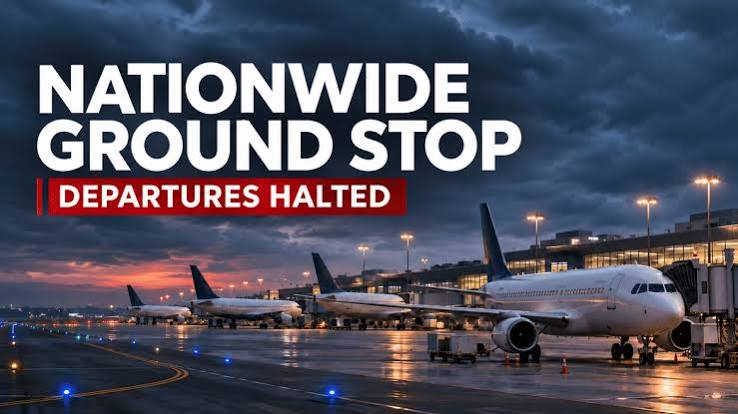
A rare aviation disruption unfolded across the United States on Friday, November 13, 2026, after the Federal Aviation Administration (FAA) ordered a nationwide ground stop for departing flights.
The order followed communication problems affecting multiple Air Route Traffic Control Centers responsible for managing aircraft across US airspace. Citing extraordinary circumstances and safety concerns, the FAA instructed aircraft operators to keep departing traffic on the ground until further notice.
The announcement drew attention from travelers, airlines and aviation observers because nationwide flight restrictions of this scale are extremely unusual. But what caused the FAA nationwide ground stop, which flights were affected, and what did the order mean for passengers?
Here is what we know, based on the initial reports and FAA information available for this update.
What Happened During the FAA Nationwide Ground Stop?
On November 13, the FAA issued a nationwide ground stop affecting departing flights from airports across the United States. The agency said communication issues were affecting multiple Air Route Traffic Control Centers. These facilities help manage aircraft traveling through US airspace, particularly during the en-route portion of a flight.
The FAA cited safety reasons and instructed operators to keep departing aircraft on the ground until further notice. Transportation Secretary Sean Duffy also confirmed that the nationwide ground stop followed communication problems affecting air traffic control centers. FAA technicians were investigating the issue.
The disruption followed earlier flight restrictions involving Chicago O'Hare International Airport and Chicago Midway International Airport.
Why Did the FAA Ground All Departing Flights?
The reported reason was a communication problem affecting multiple Air Route Traffic Control Centers. These centers coordinate aircraft traveling between airports. Controllers rely on communication systems to provide instructions, coordinate aircraft movements and maintain safe separation.
When communication systems are disrupted across multiple facilities, managing normal air traffic operations can become more difficult. The FAA therefore ordered a nationwide ground stop as a safety precaution while technicians investigated the issue.

What is confirmed: The FAA identified communication issues affecting multiple Air Route Traffic Control Centers.
What is not confirmed: Officials had not publicly established a specific technical root cause in the initial reports. Those reports did not confirm evidence that the incident was caused by a cyberattack. The event should not be described as hacking or deliberate sabotage without credible official evidence.
Which Airports and Flights Were Affected?
The nationwide order applied to departing traffic at US airports. Chicago O'Hare and Chicago Midway had already experienced flight restrictions connected to communication problems before the nationwide announcement.
Reports also described delays and operational disruption at Newark, Teterboro, Phoenix, Las Vegas, Houston and Orlando. The exact impact varied by airport, airline and flight.
The FAA's order made an important distinction between departing and arriving aircraft.
Were Flights Already in the Air Grounded?
No. According to Reuters, aircraft that were already airborne could continue toward their destinations and land. The nationwide order primarily stopped new departures.
A ground stop does not necessarily mean every aircraft must immediately return to an airport. It is an operational restriction designed to manage departures safely.
Were International Flights Affected?
The FAA said inbound international flights would be handled on a case-by-case basis. International arrivals were therefore not treated in exactly the same way as all departing traffic.
How Rare Is a Nationwide FAA Ground Stop?
A nationwide ground stop is unusual because it affects aviation operations across the country rather than a single airport or region. Reuters reported that this was the second nationwide halt of departures since the September 11, 2001 attacks.
The previous comparable event occurred in January 2023, when the FAA paused US departures following a failure of its Notice to Air Missions (NOTAM) system. That incident demonstrated the importance of aviation information and communication systems. The 2026 incident should not be described as having the same cause: the FAA's initial explanation concerned communication problems affecting multiple air traffic control centers.
What Should Passengers Do During a Nationwide Ground Stop?
Passengers with upcoming flights should avoid relying on social media rumors or assumptions about when operations will return to normal. Practical steps include:
- Check your airline's website or app: Look for flight status updates, delays, cancellations and gate changes.
- Check the FAA's official air traffic information: Visit the FAA National Airspace System status page.
- Keep airport notifications enabled: Airlines may send updates by email, text or app notification.
- Contact your airline before traveling to the airport: Confirm whether your flight is scheduled to depart.
- Keep travel documents accessible: Have your booking details and identification ready if you need assistance.
Passengers should follow instructions from their airlines and airport authorities.
Is the FAA Nationwide Ground Stop Still in Effect?
The nationwide ground stop was announced on November 13, 2026. Its operational status can change as the FAA investigates the communication problem and updates its instructions. Do not assume the restriction remains active or has been lifted without checking a current official notice.
Latest confirmed information — November 14, 2026:
The FAA's Daily Air Traffic Report page shows its latest report as Friday, November 13, and directs travelers to the live National Airspace System status page for up-to-the-minute operational information. We could not confirm a separate official notice documenting when the nationwide stop was lifted. Check the FAA Daily Air Traffic Report, the FAA live air traffic status, your airline's flight-status page and airport departure boards for current conditions.
Frequently Asked Questions
Why did the FAA issue a nationwide ground stop on November 13, 2026?
The FAA cited communication problems affecting multiple Air Route Traffic Control Centers and ordered a nationwide stop on departing flights for safety reasons.
Were all US flights cancelled?
No. The order stopped departing traffic. Aircraft already in the air could continue toward their destinations and land. International arrivals were handled case by case.
What caused the FAA communication outage?
The FAA initially reported communication issues affecting multiple air traffic control centers. The specific technical root cause was not established in the initial reports.
Was the FAA ground stop caused by a cyberattack?
There was no confirmed evidence of a cyberattack in the initial reports. The FAA's stated reason was communication problems.
Which airports were affected?
The nationwide order applied to departures across US airports. Chicago O'Hare and Midway had experienced earlier restrictions, while reports described disruption at several other airports.
When will US flights return to normal?
The timing depends on FAA operational updates and the resolution of the communication issue. Passengers should check directly with their airlines for current flight information.
Where can I check US flight status?
Passengers can check the FAA's official air traffic information, their airline's flight-status page and airport departure boards.
Final Thoughts
The FAA nationwide ground stop on November 13 highlighted how dependent US aviation is on reliable communication between air traffic control facilities. The disruption affected departing flights nationwide, while aircraft already airborne were allowed to continue landing and inbound international flights were handled individually.
The FAA's initial explanation pointed to communication problems affecting multiple Air Route Traffic Control Centers. The full technical cause should not be assumed until officials provide further information. Travelers should follow official FAA updates and check directly with airlines before heading to the airport.
For more reporting, see our related report on whether the ground stop was a cyberattack, our traveler guide to flight cancellations and resumption, coverage of the Florida Learjet crash and the DailyUpdates news archive.